Secret Brotherhood Organizations: History, Myths, and Influence. Throughout history, people have been fascinated by secret brotherhood organizations. These mysterious groups are often associated with hidden knowledge, powerful rituals, and influence behind closed doors. From ancient societies to modern fraternities, secret organizations have inspired curiosity, fear, and countless conspiracy theories.
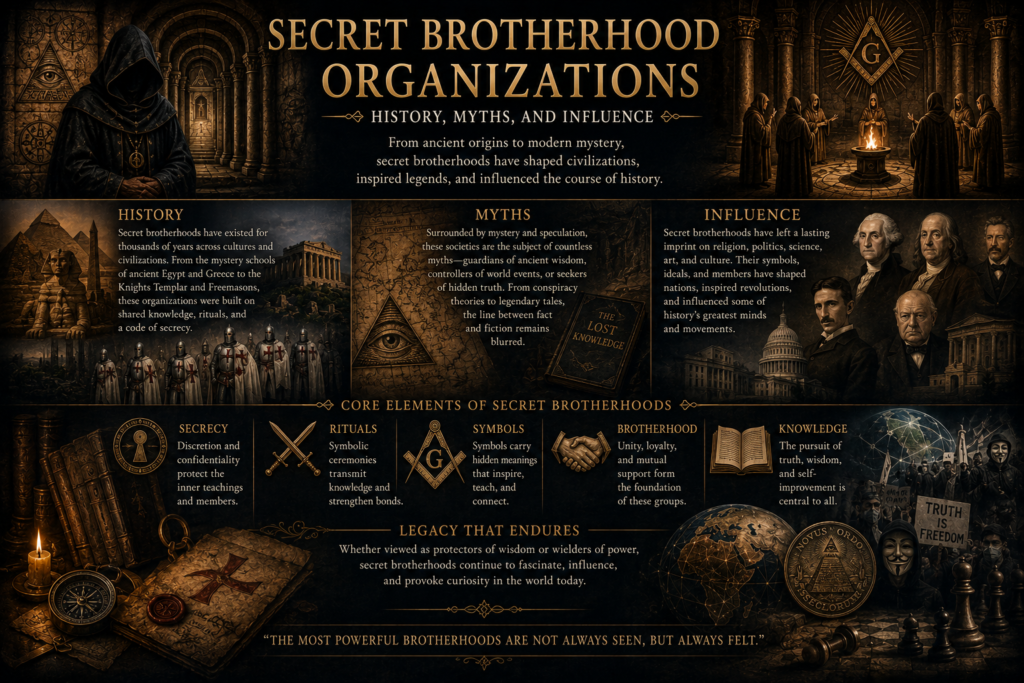
In this article, we explore the origins, purposes, and cultural impact of secret brotherhood organizations, while separating historical facts from popular myths.
What Are Secret Brotherhood Organizations,History, Myths, and Influence.?
Secret brotherhood organizations are groups that operate with private membership, exclusive rituals, and confidential teachings. Members often share common beliefs, goals, or traditions that are hidden from outsiders.
These organizations may focus on:
- Spiritual teachings
- Political influence
- Mutual support and networking
- Philosophical study
- Social or charitable activities
- Preservation of traditions and rituals
Many secret societies use symbols, passwords, initiation ceremonies, and ranks to strengthen loyalty among members.
The Origins of Secret Societies
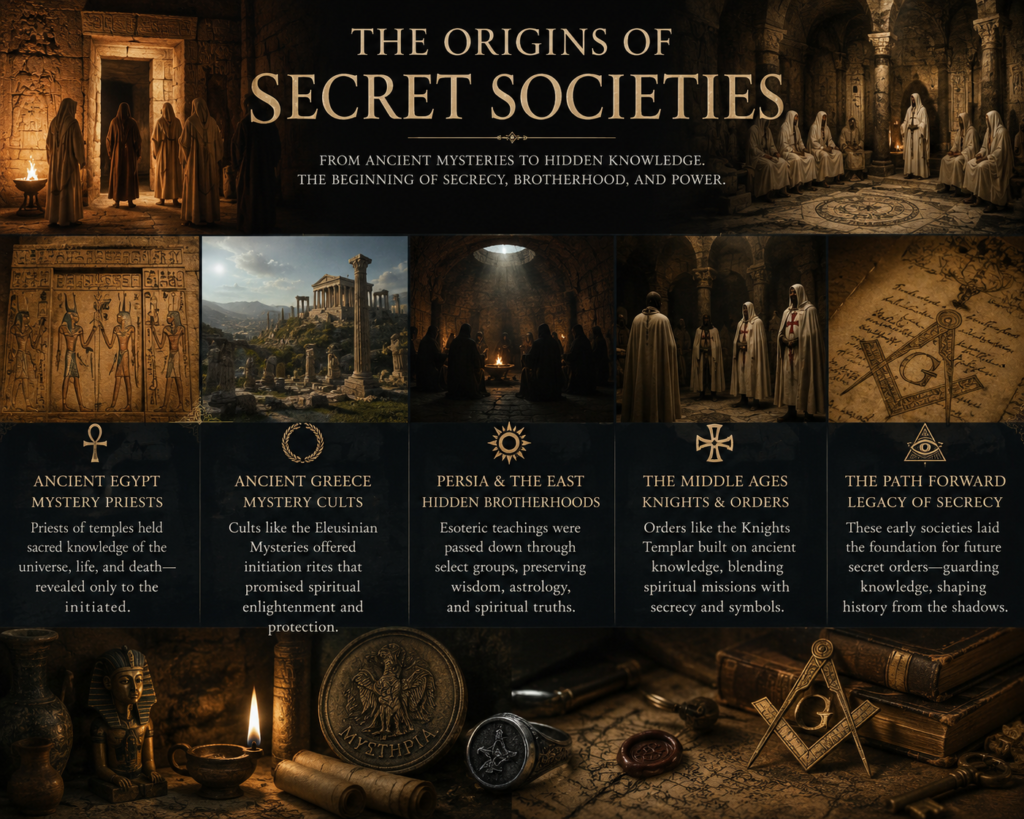
Secret brotherhoods have existed for thousands of years. Ancient civilizations often created exclusive groups for priests, warriors, scholars, or rulers.
Some early examples include:
- Ancient mystery schools in Egypt and Greece
- Medieval knightly orders
- Religious brotherhoods
- Scholarly and philosophical circles
These groups usually protected sacred knowledge or provided members with social and political advantages.
Famous Secret Brotherhood Organizations
Freemasonry
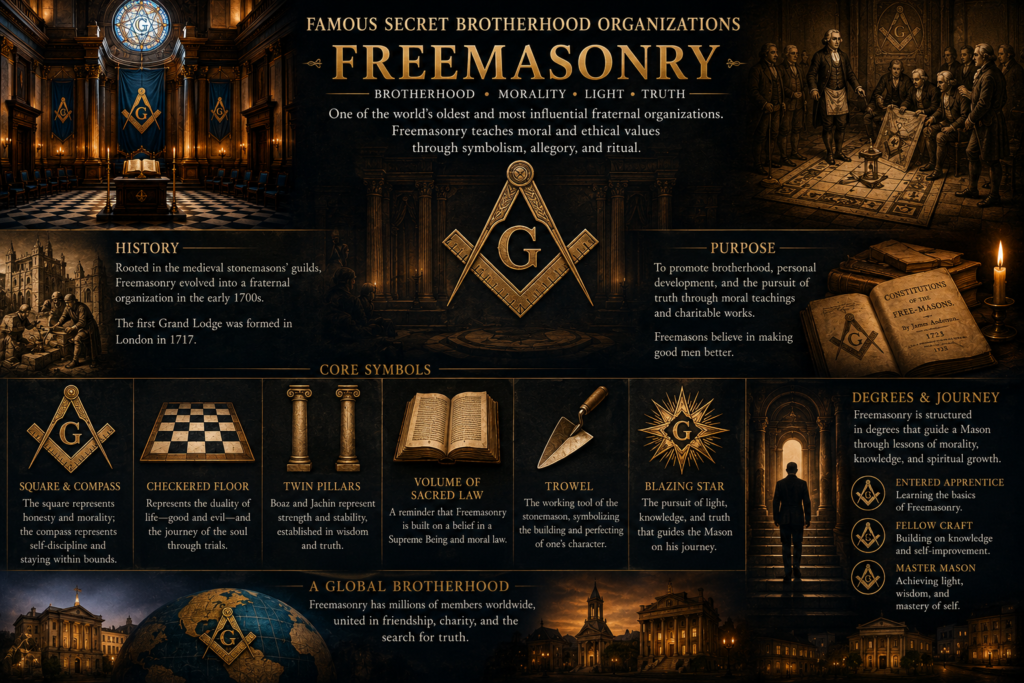
Freemasonry is one of the world’s most well-known secretive fraternities. Founded centuries ago, it promotes moral values, charity, and personal development. Members use symbolic rituals and degrees inspired by ancient stonemason traditions.
Freemasonry has often been linked to conspiracy theories, although historians generally describe it as a social and charitable organization
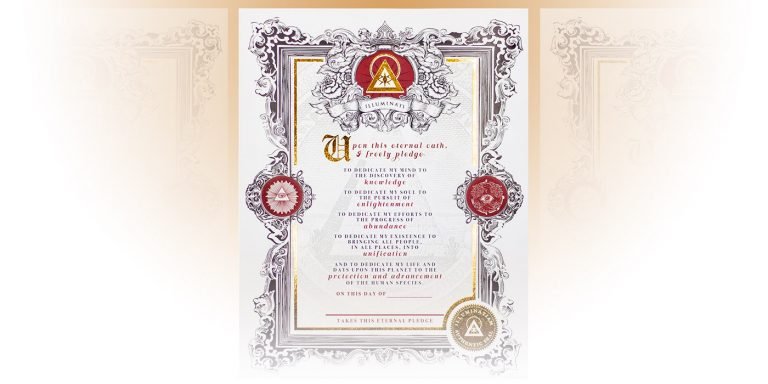
Illuminati
The Illuminati began in 18th-century Bavaria as a small intellectual movement promoting reason and secular ideas. Over time, popular culture transformed the Illuminati into a legendary secret elite said to control governments, entertainment, and finance.
Today, most references to the Illuminati are connected to conspiracy theories rather than verified historical evidence.
Knights Templar
The Knights Templar were a medieval Christian military order known for protecting pilgrims during the Crusades. Their sudden downfall and hidden wealth inspired centuries of myths involving treasure, secret rituals, and hidden knowledge.
Rosicrucians
The Rosicrucians are associated with mysticism, alchemy, and spiritual enlightenment. Their teachings focus on wisdom, personal growth, and esoteric philosophy.
Why People Join Secret Brotherhoods
People join exclusive organizations for many reasons, including:
- Networking opportunities
- Brotherhood and belonging
- Access to traditions and rituals
- Spiritual exploration
- Leadership development
- Social influence
The sense of mystery and exclusivity often increases the appeal of these groups.
Symbols and Rituals
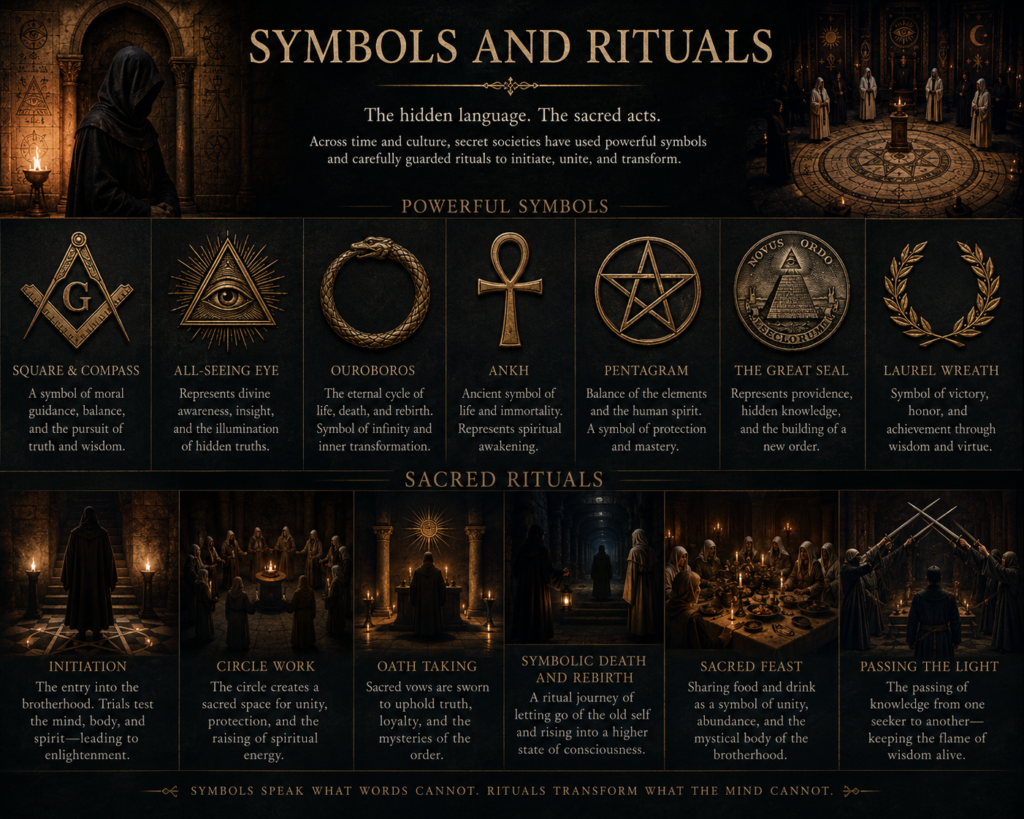
Secret societies frequently use symbols to represent their beliefs and traditions. Common symbols include:
- The all-seeing eye
- Pyramids
- Compasses and squares
- Skulls and keys
- Hidden hand gestures
Rituals are also central to many organizations. These ceremonies may symbolize loyalty, transformation, or advancement within the group hierarchy
Secret Societies in Popular Culture
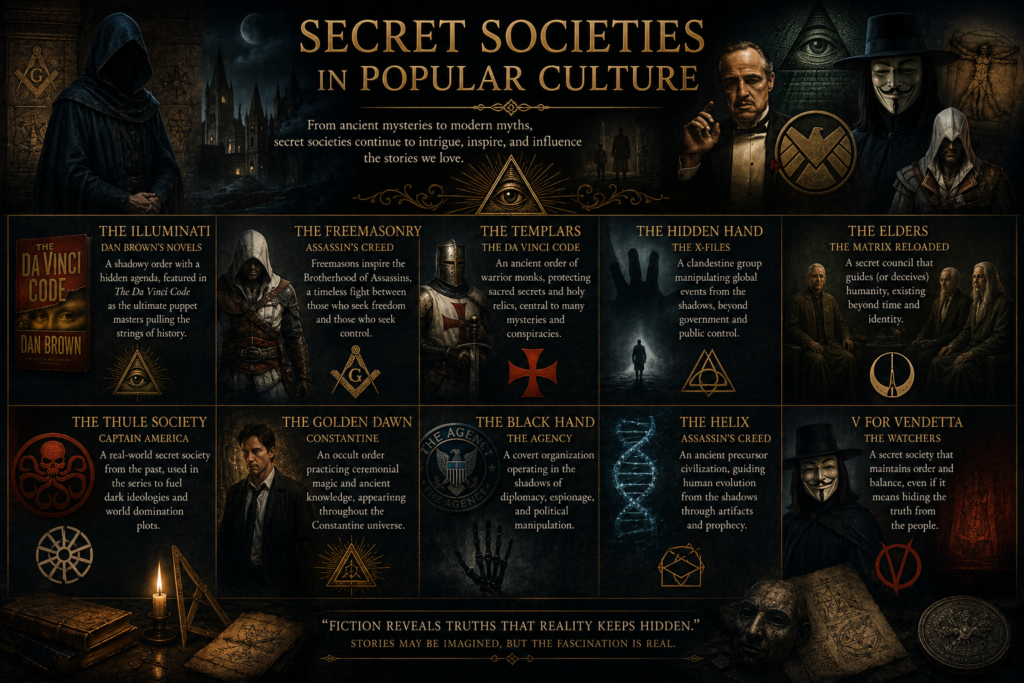
Movies, books, and online media have made secret brotherhood organizations a major part of entertainment culture. Stories about hidden rulers, coded messages, and underground networks continue to attract audiences worldwide.
Popular themes include:
- Government conspiracies
- Hidden wealth and power
- Celebrity connections
- Ancient prophecies
- Secret rituals and symbols
Social media has amplified interest in these topics, leading to viral theories and online communities dedicated to uncovering alleged secrets.
Myths vs. Reality
While some secret organizations genuinely existed throughout history, many modern claims are exaggerated or fictional.
Common myths include:
- Secret groups controlling all world governments
- Celebrities belonging to hidden cults
- Ancient organizations ruling global finance
- Hidden supernatural powers
Historians generally agree that most real-world secret societies were far less powerful than conspiracy theories suggest.
The Lasting Fascination with Secret Brotherhood Organizations
The mystery surrounding secret brotherhood organizations continues to captivate people because humans naturally seek hidden meanings and exclusive knowledge. Whether viewed as historical fraternities, philosophical groups, or conspiracy legends, these organizations remain deeply embedded in global culture.
Their blend of secrecy, symbolism, and influence ensures that secret societies will continue to inspire debate, curiosity, and storytelling for generations to come.
Conclusion
Secret brotherhood organizations have shaped myths, history, and popular culture for centuries. From the Freemasons and Illuminati to the Knights Templar and Rosicrucians, these groups continue to spark fascination around the world.